
Hiring leaders of leaders
A framework for assessing adaptability, decision logic, and ego management at the highest levels of leadership.

Hiring a leader of leaders is a different hiring game entirely. Not just because the impact of the role is different, but because the assessment dynamics are different. How you define and measure success is different. The whole conversation should be different.
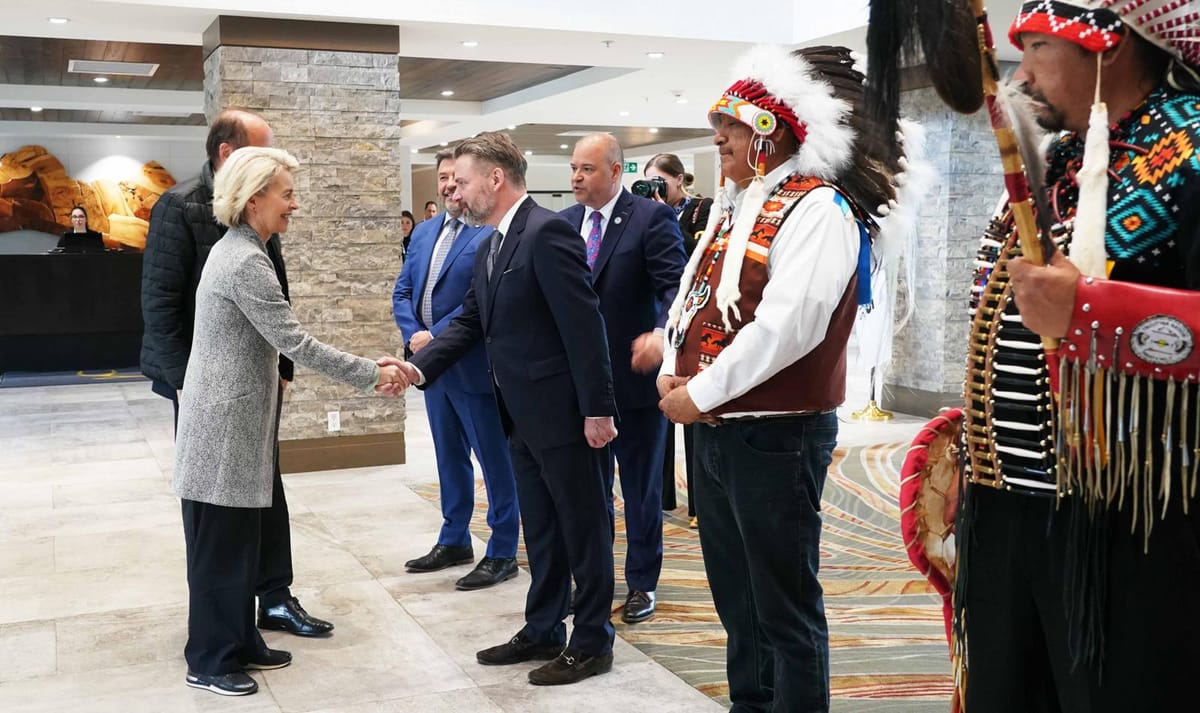
To expand how I think about this, I called Jorg Rodig. He spent 20 years at Four Seasons, a brand where standards in execution, leadership, and talent culture are as high as they get. He has held senior roles at Edition and Pomeroy Lodging, where he was most recently responsible for bringing to life the latest G7 meeting.
Now he’s bringing that perspective to his advisory work, helping luxury hospitality clients eliminate operational and financial blind spots.
Jorg believes leadership is situational and that “one size doesn’t fit all.” When evaluating leaders of leaders, he focuses on three things: their ability to continue learning, the judgment behind how they make decisions, and whether they can manage their ego.
What made me reach out to him was that he knows what high standards look like, and he has a rare dual-profile with expertise across both sides of the hospitality business: deep operational leadership and corporate strategy.
One size doesn’t fit all.
“I believe that leadership is situational. One size doesn’t fit all. Mr. Sharp, Isadore Sharp, the founder of Four Seasons, used to say it requires different leadership styles at different times. An effective leadership style in 1990 may not be as relevant in 2010 or 2026.”
Context matters. Team maturity matters. Organizational culture matters. The moment the organization is going through might matter most of all. A property turnaround requires a different leader than a stabilized asset. A fast-growth lifestyle brand demands different instincts than a heritage luxury company.
Jorg thinks that looking for “the best leader” in abstract terms is a mistake. The real questions are: best for what? And best for when?
“…the business and the industry evolve and push you to react, adapt, and pursue new opportunities. Knowing this, you need to pay attention to how you hire leaders of leaders to align with where the business wants to go and what it needs to achieve its strategic goals. What I’ve seen is that sometimes the system creates the conditions for hiring failure at that level, with such high stakes and implications for the business. Especially in bigger hospitality groups, there are so many layers, so many opinions, so many checkboxes that you can create a disconnect between what the business actually needs and the person you hire.”
What I understood from this is that hiring a leader of leaders is not just different in degree, but different in kind. Hiring at the executive level is not about filling a role, but about aligning trajectory.
What changes when you lead leaders?
I asked Jorg what actually changes when you move into a leader-of-leaders position, and he said that the transition from operator to leader of leaders is not a promotion in scope; it is a promotion in mindset.
“I think the biggest challenge, and it continues to be a challenge for me, is to give up control. You learn that you actually don’t have control over anything, really. You have influence, but you don’t really have control as a senior executive. When you move up, you lose control. You go from being responsible for execution to being responsible for developing, securing, and shaping the culture that influences the work, talent, leadership, and norms that drive execution.”
Leaders who in the past were praised for their operational precision are now measured by leadership quality, culture, and the performance of others. For many strong operators, this is the hardest adjustment.
The distinction Jorg offers sounds simple, but it’s not. And it changes how you should evaluate talent. Excellence in execution does not automatically translate into excellence in enabling others.
How to evaluate the success potential of a leader of leaders?
Effective evaluation becomes critical at this level. Jorg focuses on three things: the ability to continue learning, the quality of judgment behind decisions, and ego management.
1) Can they evolve?
When evaluating candidates for leadership roles, Jorg starts with a fundamental question: Can this person evolve?
This learning attitude keeps showing up. It was also central to Inna Khostikyan’s approach. In a world where hospitality is constantly reshaping itself through new ownership models, guest expectations, technology, and labor dynamics, a fixed leader becomes a liability. An evolving one becomes an asset.
“There must be a demonstration that one can evolve, that one can learn new things. In a constantly changing environment, this is essential. I ask myself: how has this person continued to learn? How have they intentionally evolved their leadership style, their technical knowledge, their understanding of the market? Not just formal education, although that matters, but through reading, through seeking out new perspectives, through doing things to grow their understanding…”
He told me about Robert Cima, a mentor he had at Four Seasons who started in 1982 and retired just last year.
“Robert always figured out how to continuously reinvent himself. When social media came around and most GMs didn’t have that sensibility, Robert knew he needed to learn. So he scheduled weekly tutorials with our assistant manager who ran social media, and Robert would get his education from him. I compare Robert to Madonna. He always reinvented himself, and he was very conscious about it…”
The pattern Jorg learned from Robert and shares with me is clear: identify the gap, invest in closing it, apply it. That pattern is visible in Jorg’s own career decisions, including pursuing an EMBA at Les Roches to stay ahead of evolving trends and business complexity.
For Jorg, past growth is evidence of future adaptability. When interviewing a leader of leaders, he pays attention to the following signals: How has this person continued to learn? How have they evolved their leadership style? How have they expanded their technical knowledge? How have they deepened their understanding of the market and guest dynamics?
2) Judgment over problem solving.
This is where Jorg’s framework gets particularly interesting. His second recommendation is more nuanced and reflects his experience and rigor when hiring.
“…When you hire leaders, you’ve got to test judgment. Not whether people make good decisions or not, that can be relative, but how do people make decisions? That’s the bigger question. Is that decision-making process aligned with the organization’s existing process?”
He wasn’t talking about checking whether a candidate has problem-solving skills, but about evaluating the logic behind their judgment.
"...This distinction matters for two reasons. First, leaders of leaders don’t solve problems alone; they influence others to solve them. So the logic behind their decisions becomes critical. A robust decision logic makes it easier to create buy-in and align teams around the “why.” It provides guidelines and direction to the leaders who report to them. Second, understanding someone’s judgment reveals how they’ll relate to an existing system. Will they respect it? Will they try to change it? Will they push transformation in a way that fits the culture, or clash with it?"
When assessing judgment, Jorg asks candidates to describe one of the most impactful leadership decisions they’ve made. Then he listens carefully: What was the context? What factors did they consider? What stakeholders were involved? What alternatives did they weigh? What logic guided them?
As a performance- and skills-based hiring advocate, I find this approach unique because you’re not just assessing past performance; you’re evaluating the architecture behind those results. You’re not just evaluating competence; you’re assessing how they’ll use it to shape the ecosystem around them.
3) The ego test.
The third focus area, and perhaps the most subtle, is ego management. This goes beyond the personality assessments many companies use as final differentiators. Jorg asks something deeper:
“…can this leader step aside from themselves? Eckhart Tolle says the ego holds us back in our lives. The question is: can they manage that ego? Can the candidate step aside from their own ego and not let it command direction or decision-making? I’m not saying they’re arrogant or think too much of themselves, because those can even be positive qualities in a leader driving change. But when ego makes you think you’re the main character with all the answers, curiosity disappears. Your genuine inclination to understand the situation and the people involved weakens. Your listening suffers. Your learning slows. Your ability to empower others and implement collective leadership gets reduced…”
Jorg says curiosity is a signal of a well-managed ego.
“I think when I hire leaders, I look for that spark, that superpower of asking good questions. That curiosity gives me an indication: do they have agility? Can they evolve and adapt?”
He says that when the ego is balanced with curiosity, leaders ask better questions. They seek to understand before acting. They focus on facts over emotion, power, and politics. They enable others rather than overshadow them. At the executive level, this determines whether a leadership team becomes aligned or fragmented.
The framework
What I appreciate most about talking with Jorg is rediscovering how great leaders use frameworks, not checklists. His perspective isn’t a recipe for hiring, just a way of thinking about what makes someone effective at leading other leaders.
As I wrote in my article on the low-fidelity of CVs, these aren’t questions you answer by looking at a resume. They require conversation, probing, and understanding, not just what someone has done, but how they think.
Organizations hiring leaders of leaders need to understand that leadership at this level is less about authority, experience, or even charisma. It’s more about architecture and logic. Because once you’re leading leaders, your real product isn’t execution. It’s the culture that makes execution possible.
Thank you for reading, and don’t forget to subscribe if you want to know when the next post is out.